DHL Express volumetric weight in the UK with worked examples
For DHL Express UK, a light box can be priced using its volume. Work through the 5,000 divisor, compare actual weight and apply the service’s rounding separately.
At a glance
- DHL Express UK publishes a centimetre-to-kilogram volumetric divisor of 5,000.
- Compare volumetric weight with the packed parcel’s measured weight.
- The UK guidance describes rounding up to the next half-kilogram.
- The embedded calculator shows the calculation before service-specific rounding and surcharges.
In this article (6)
For DHL Express UK, calculate volumetric weight in kilograms by multiplying the packed parcel’s length, width and height in centimetres, then dividing by 5,000. Compare that result with the actual packed weight. DHL’s UK guidance uses the greater weight and describes rounding up to the next half-kilogram. Confirm the terms of your booking before paying. DHL Express measuring and weighing advice.
Why a lightweight box can have a higher chargeable weight
A large, light parcel occupies space as well as adding weight. DHL Express’s product team explains its volumetric calculation and says the chargeable weight is the higher of actual and volumetric weight. For several packages, it instructs senders to calculate each piece separately. DHL Express weight and dimensions guidance.
For a sender, the useful question is whether the box you intend to use changes the weight used for pricing. We recommend comparing suitable protective packaging options before buying the label. Keep the contents protected while avoiding unnecessary empty space.
Calculate your own box below
Measure the outside of the closed, packed box and weigh the complete parcel. In the volumetric weight calculator, enter centimetres, a divisor of 5,000 for the DHL Express guidance discussed here, and the actual weight in kilograms. The tool displays an estimate to two decimal places. It leaves carrier rounding, service limits and additional charges for you to check.
The formula is length × width × height ÷ 5,000. Our example box is 40 × 30 × 20 cm, giving 24,000 cm³ ÷ 5,000 = 4.8 kg. If the scale reads 2 kg, the volumetric figure is higher. The calculation does not mean that the contents weigh 4.8 kg.
Apply half-kilogram rounding separately
DHL Express UK’s payment FAQ describes rounding parcel weight up to the nearest half-kilo and comparing actual and volumetric weight for pricing. Our examples below apply that published rounding to the higher figure. They illustrate the arithmetic and do not quote a postage price. DHL Express UK payment and weight FAQ.
| Packed box | Actual weight | Volumetric result | Higher figure rounded up to a half-kilo |
|---|---|---|---|
| 40 × 30 × 20 cm | 2 kg | 4.8 kg | 5 kg |
| 40 × 30 × 15 cm | 2 kg | 3.6 kg | 4 kg |
| 40 × 30 × 20 cm | 6 kg | 4.8 kg | 6 kg |
In the first two examples, reducing the box height by 5 cm changes the volume-based figure while the actual weight stays the same. Only use the smaller box if it still provides suitable protection. After repacking, measure and weigh again so the quote uses the final parcel.
Check the booking route and each package
The UK payment FAQ distinguishes courier collection in your own packaging from Service Point drop-off using supplied boxes and envelopes. It says Service Point pricing depends on the destination zone and chosen box size. Check the relevant option rather than treating the calculator as a complete quote. DHL Express booking and payment options.
For a shipment with several boxes, make a separate record for every piece. Do not enter the dimensions of one box alongside the combined actual weight of all the boxes. Keep the final dimensions, scale reading and booking confirmation together so you can compare any later measurement query with the figures you entered.
Our general parcel preparation checklist explains how to record a finished parcel. For further coverage, visit the DHL hub or browse the parcel tools. This guide covers the cited DHL Express UK guidance. Check your selected product and contract for its own conditions.
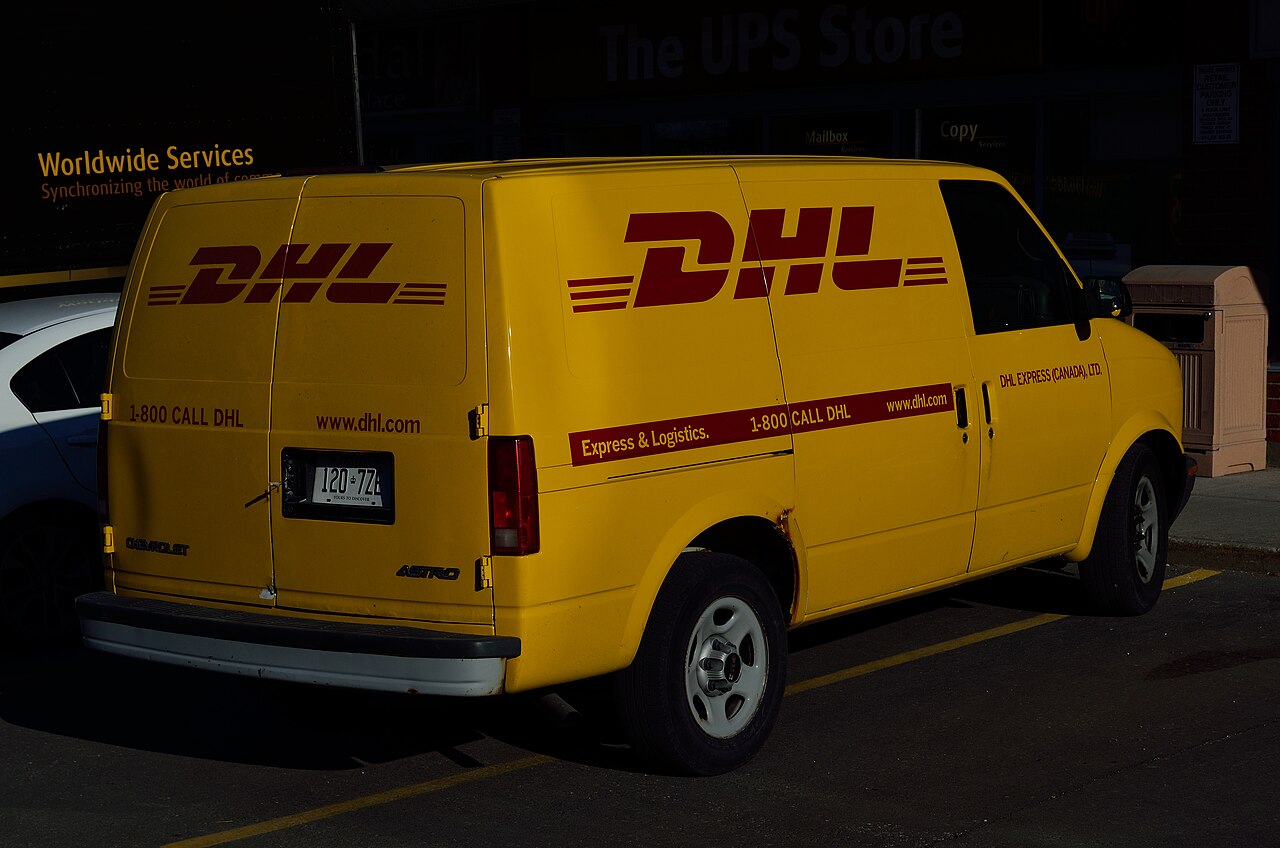
Primary sources checked on 5 November 2026. Independent Parcel Insider guide. Illustrative archive photograph by Raysonho @ Open Grid Scheduler / Grid Engine, via Wikimedia Commons, taken on 1 May 2015 and dedicated to the public domain under CC0 1.0. Resized and cropped for display. It does not depict a specific UK shipment.

Sources
Measure the finished box, calculate its volumetric weight and check the relevant booking terms before treating the result as chargeable weight.
Related guides
 UK
Royal Mail parcel checklist: pack, weigh and measure before booking
Prepare accurate parcel details before buying postage: pack securely, weigh the finished box and measure its o…
30 Oct 2026
 UK
Royal Mail Christmas posting dates 2026 and a UK dispatch plan
Royal Mail’s recommended Christmas dates run from 18 December for 2nd Class to 23 December for Special Deliver…
5 Nov 2026
 UK
Collecting a DPD parcel at a Post Office: pass, ID and deadline
Check when a DPD parcel is ready at a participating Post Office, what ID to bring and what to do if you cannot…
4 Nov 2026
 UK
Parcel marked delivered but missing? What to do in the UK
Ask the retailer to investigate an order it arranged to deliver. Check what the delivery record shows and docu…
4 Nov 2026
 UK
Royal Mail redelivery: missed delivery options and deadlines
Missed a Royal Mail delivery? Understand automatic redelivery, booked alternatives, the holding deadline and w…
3 Nov 2026
 UK
Yodel tracking now uses InPost: where to check your parcel
Still looking for Yodel tracking? Find the official InPost tracking route, what happened to old accounts and w…
2 Nov 2026
Parcel news that matters.
Courier changes, delivery disruption, price updates and practical shipping guidance.
No spam. Unsubscribe anytime.